01 · Civic technology · Founder
Swaraj
India's first gamified civic-education and political-participation app — free, live on iOS and Android, and built for the students who sit furthest from the institutions that govern them.
Status
Live · iOS & Android
Recognition
Best AI Startup of the Year
Presented to
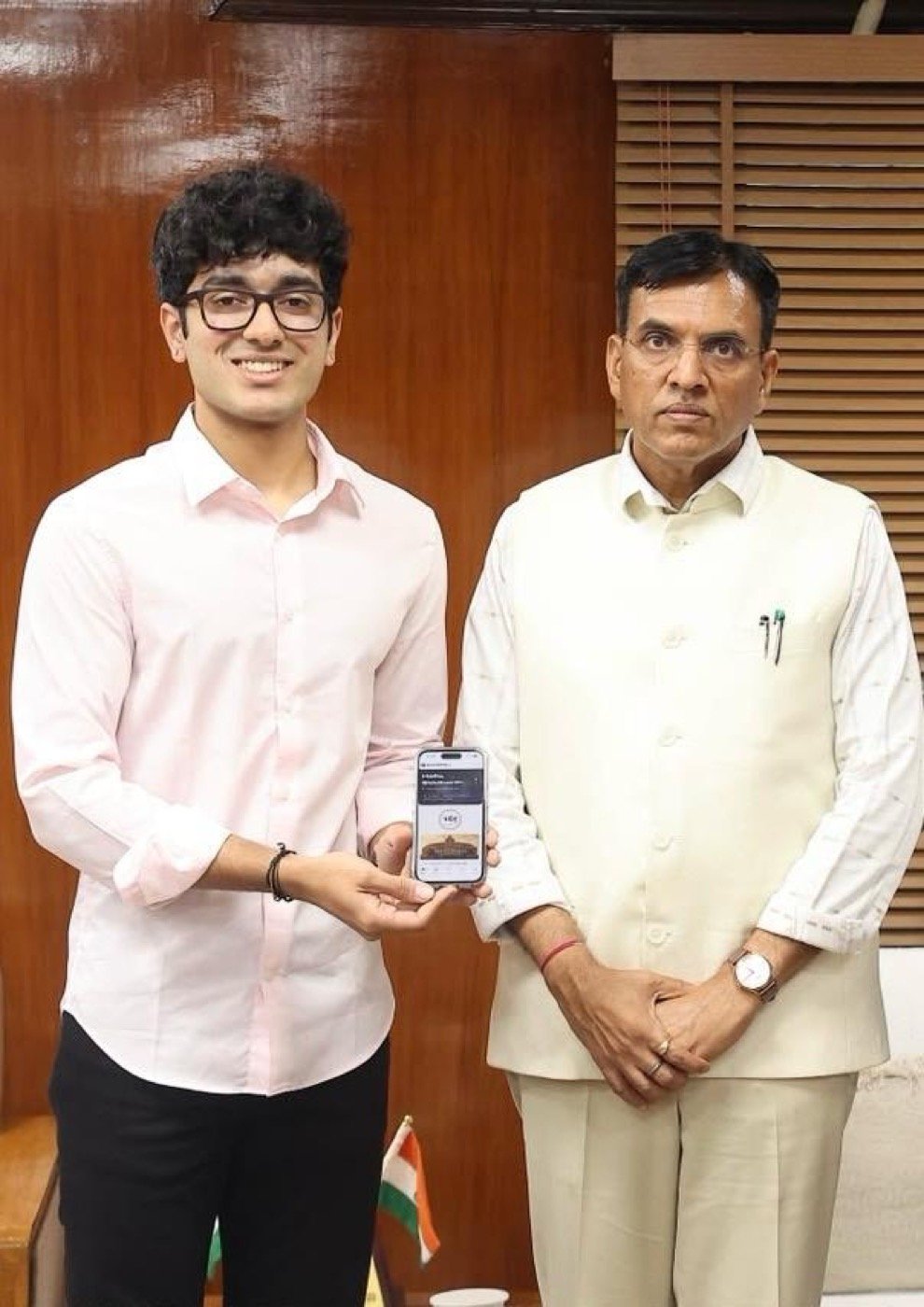
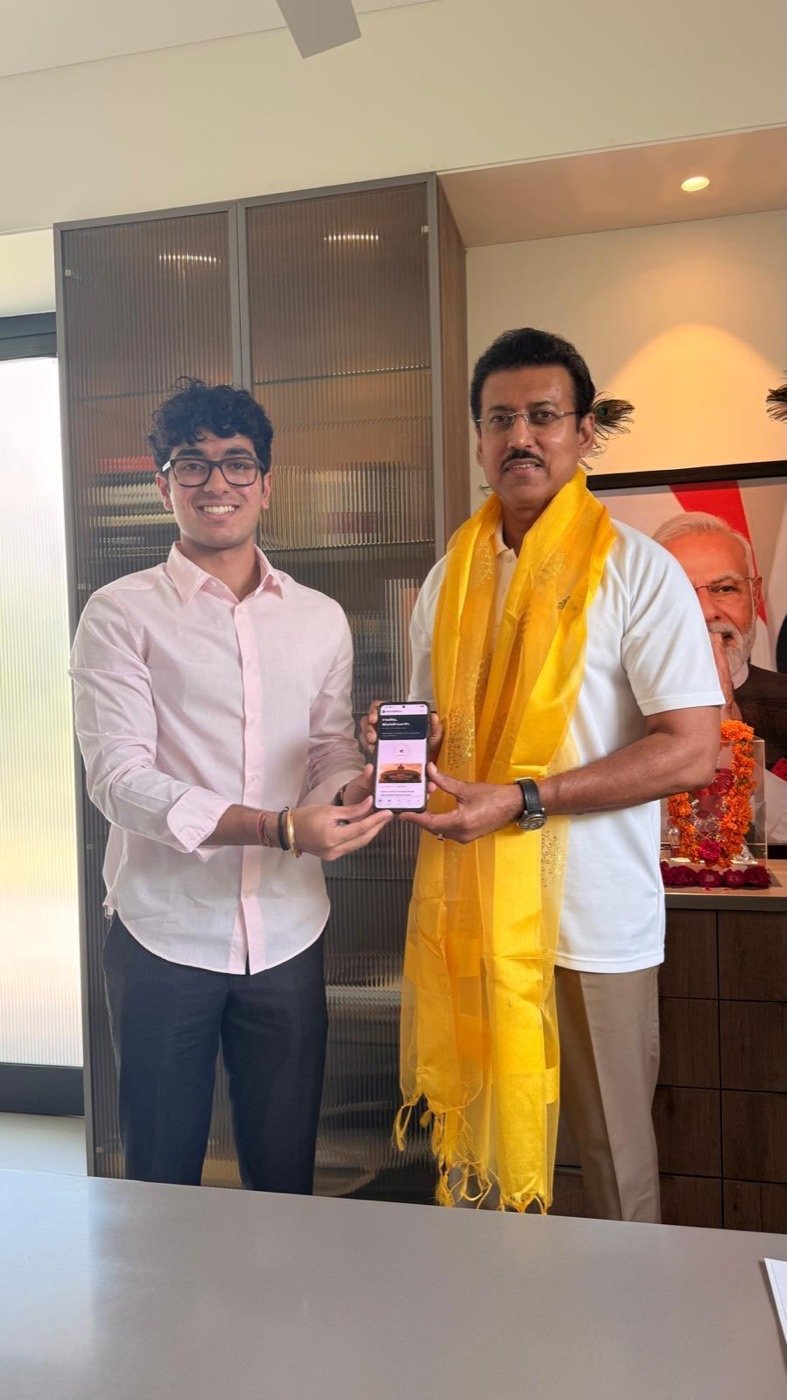
4 sitting ministers
Languages
Hindi & English
Civic education in Indian schools has a structural problem.
Students learn the Constitution as a syllabus. They can explain federalism, reproduce the Preamble, and write a competent board-examination answer on local self-government. Very few have ever used any of it. The distance between knowing that a grievance can be filed and knowing how to file one is where most young citizens stop.
Swaraj was built to close that distance.
Where it started
Swaraj began in the same waiting rooms as Samvidhan Setu. As one of the few high-school students interning inside Rajasthan's government, I spent hours outside offices and in corridors, watching how ordinary people approached the institutions meant to serve them. What struck me was not that the system was closed — it was that it was unexplained. People lived under decisions they had never been taught to understand. And the students I met, sharp and curious, treated politics as something distant, something that would matter to them only later.
I didn't believe that. A young person's stake in their country does not begin at eighteen. They live with these decisions now.
Swaraj means self-rule. Gandhi's argument was that self-rule is hollow if citizens do not understand the machinery they are meant to govern. That is the gap I set out to close.
What it does
Swaraj treats participation as something practised rather than studied. Instead of dry lessons, the whole experience is built like a game: ten sequential story levels moving from the Constitution to how an ordinary person enters the political system, each unlocking the next.
- Civic missions that require the user to engage with real local institutions, not simulations.
- A Debate Arena that scores students on the quality of their reasoning, not the side they take — on the principle that there is no wrong political view, only a weak argument.
- A Daily Challenge built on live Rajasthan and national news, turning following politics into a daily habit.
- An AI civic chatbot trained on Swaraj's own content, answering the questions a textbook never will — down to what a student's own MLA actually does.
- Constituency personalisation, so the app maps to each student's local representatives and politics stops being abstract.
The gamified structure is deliberate. Attention, not information, is the binding constraint in civic education. Progression, points and completion hold a student's attention where a textbook chapter does not.

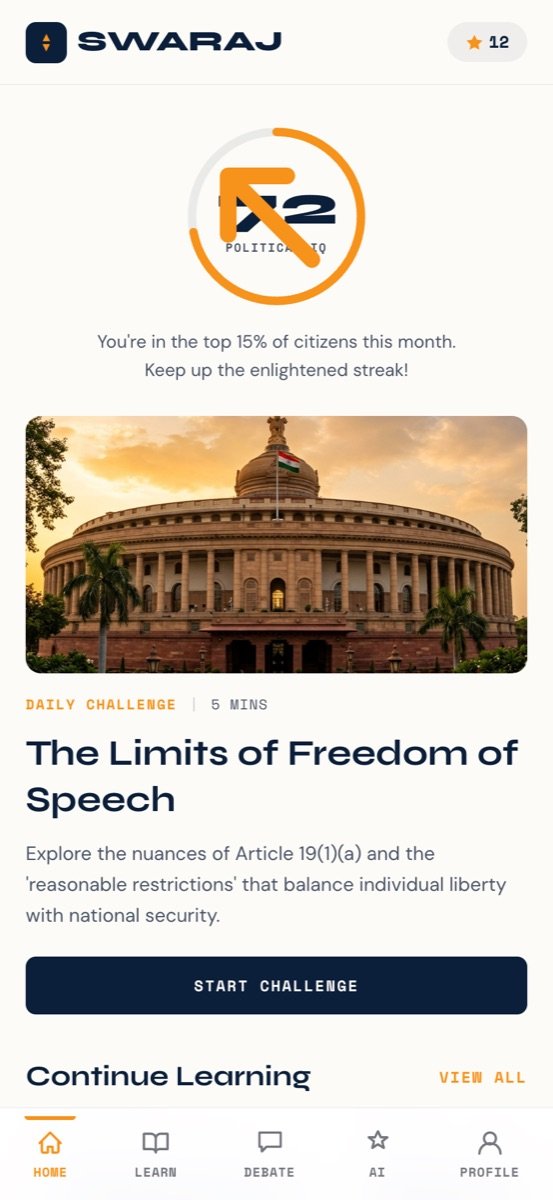
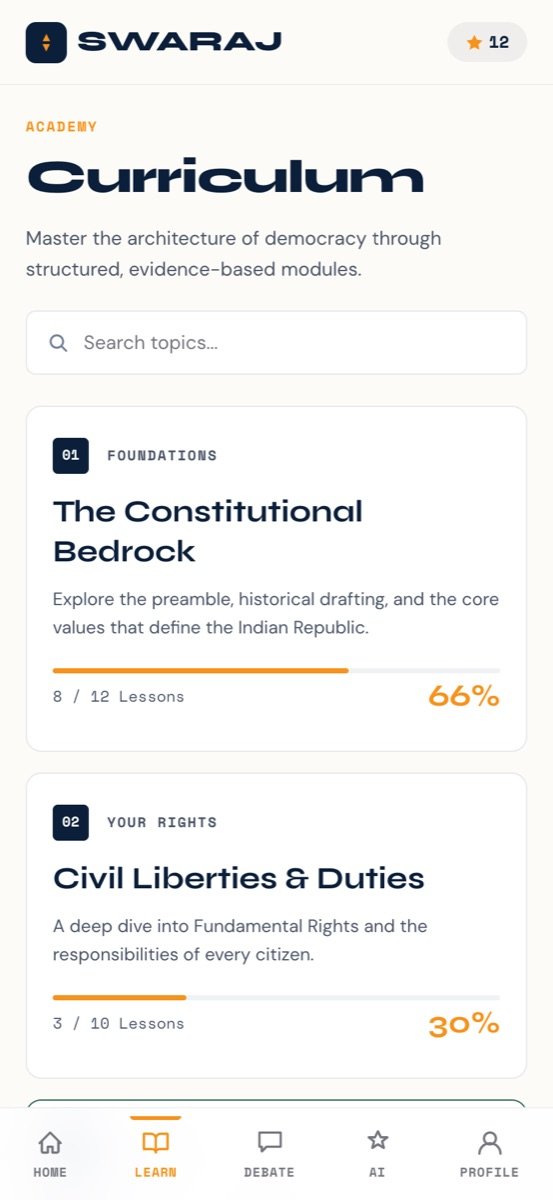
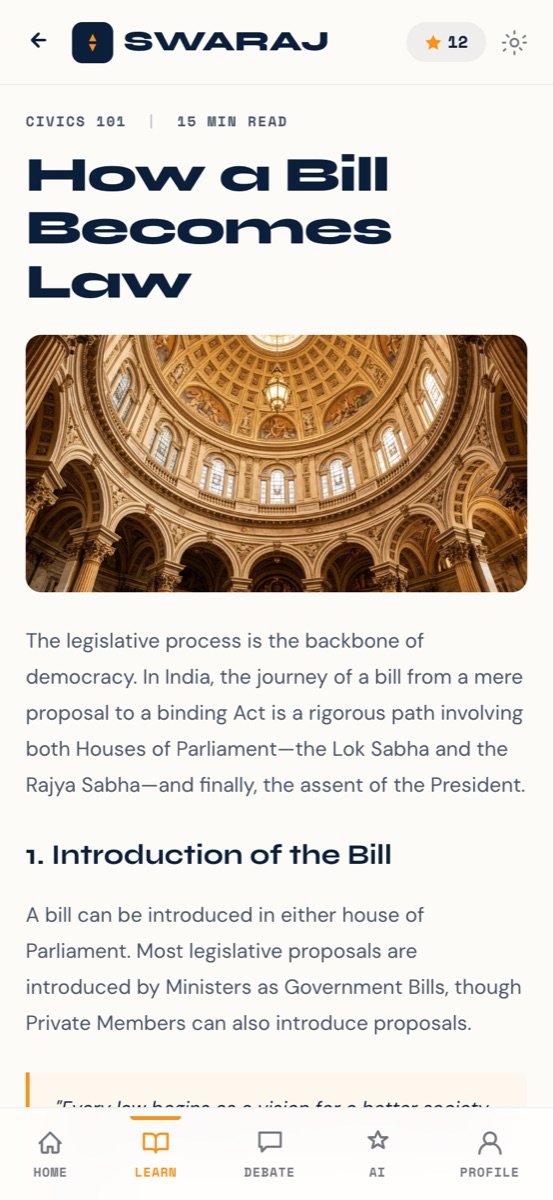
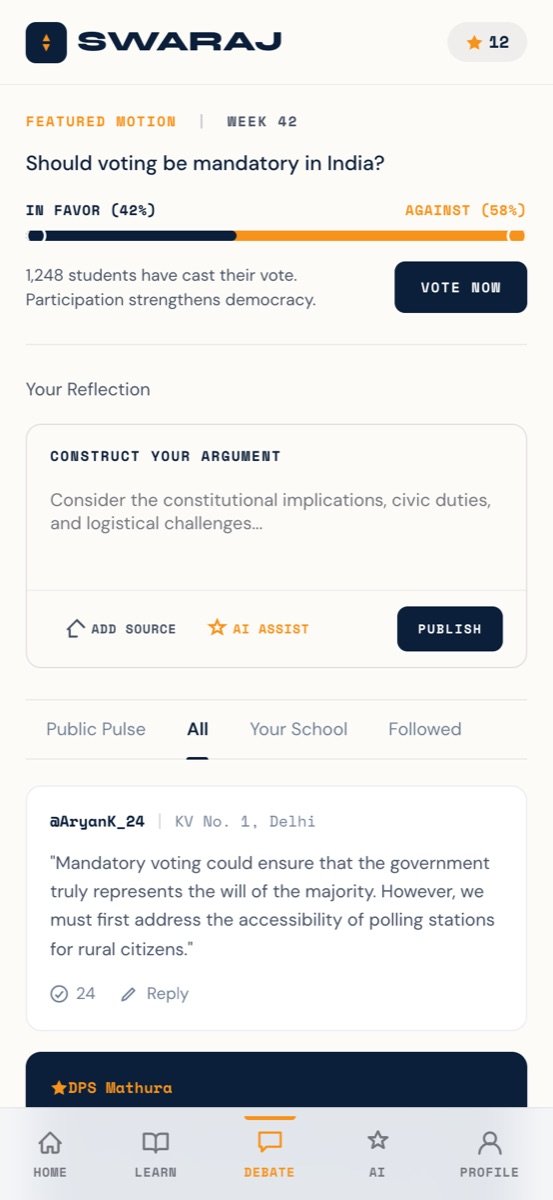
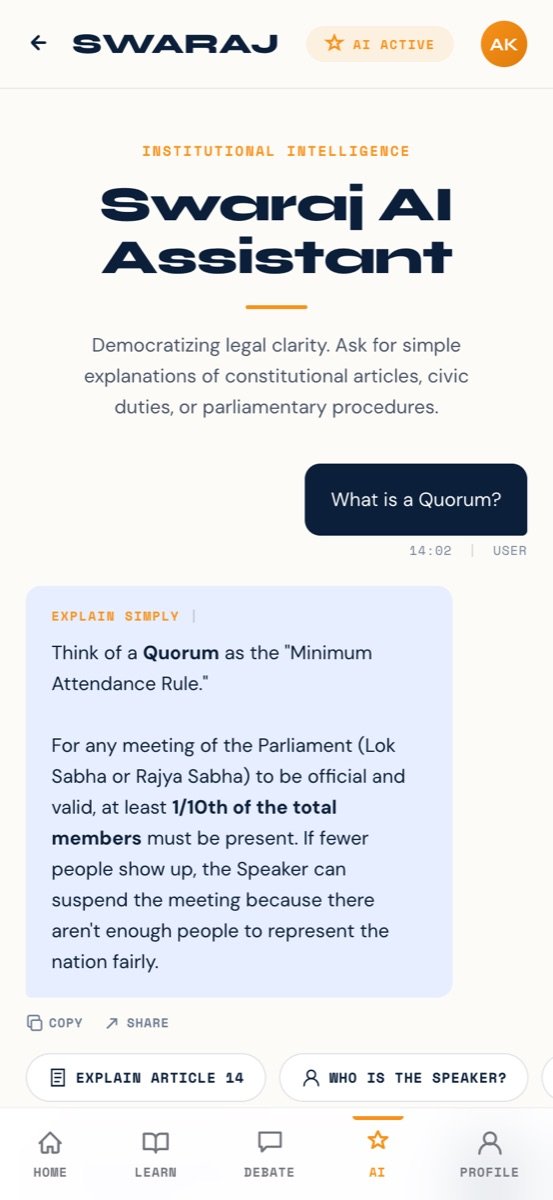
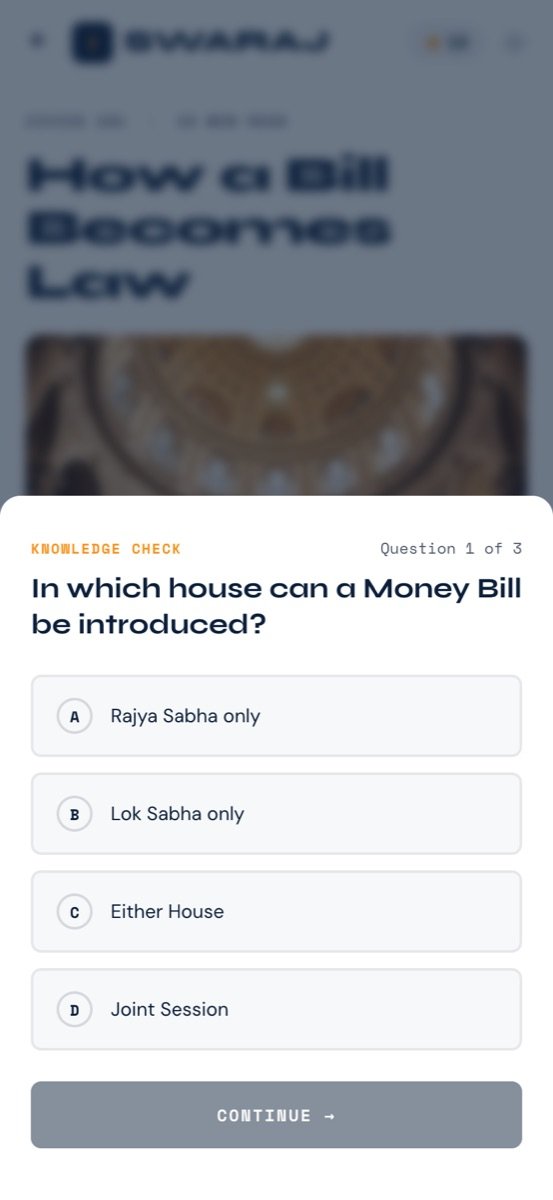
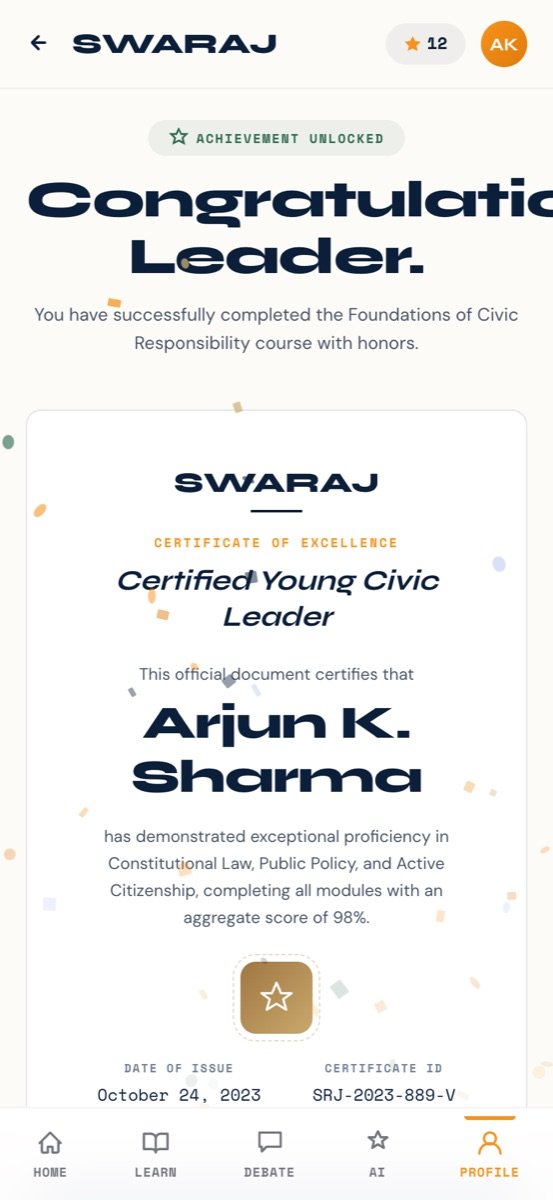
Screens from the Swaraj app. Tap any image to enlarge.
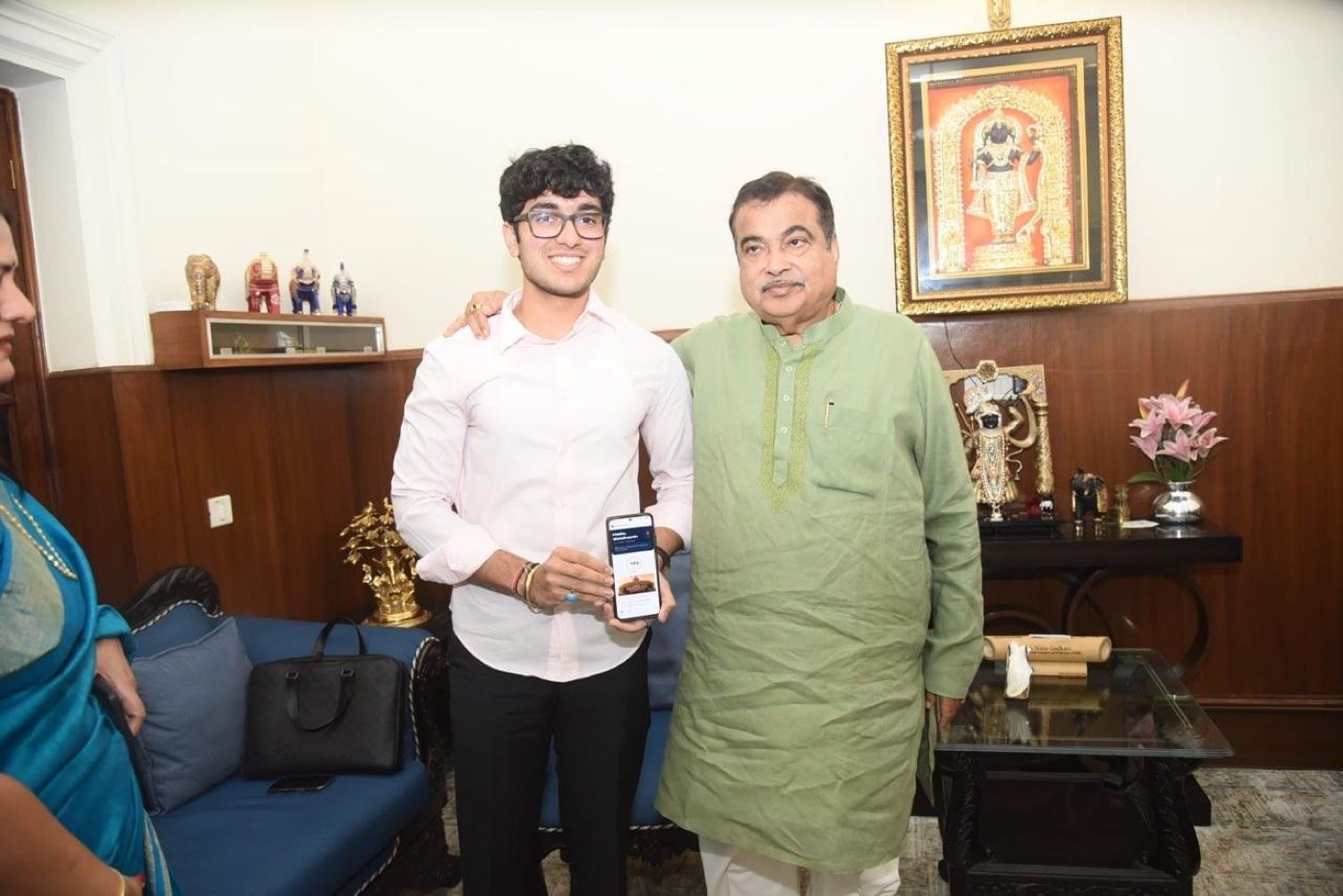
Taken to government
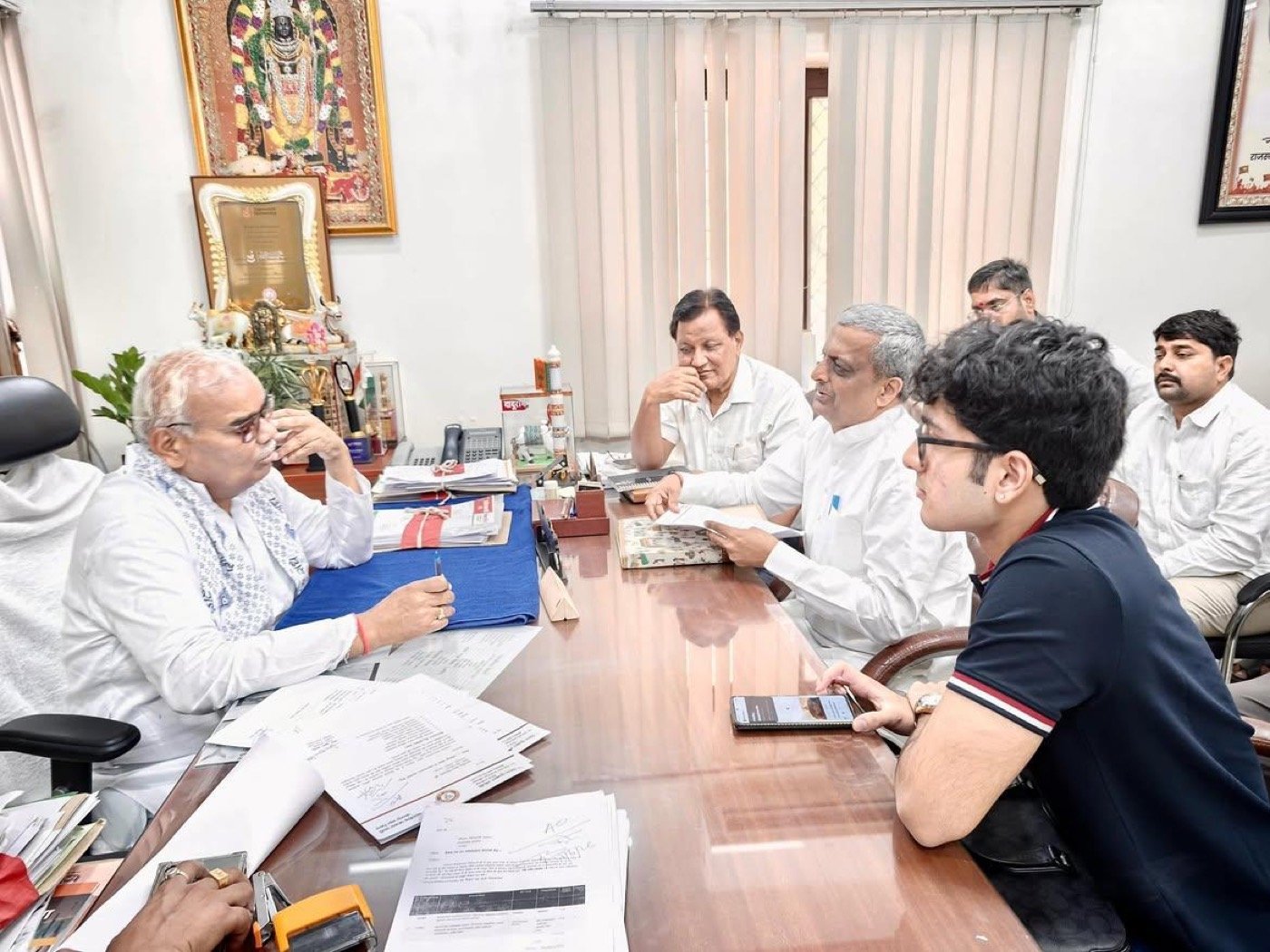
Presented to four ministers
Who it is for
What makes Swaraj different is who it is built for. It runs on Android and iOS, in Hindi and English, designed for the rural and marginalised students who sit furthest from these institutions. The plan is to bring Swaraj into government-school classrooms through the Government of Rajasthan, so that the students with the least access are the first to gain it.
Swaraj rests on a single premise: children are not future citizens waiting their turn. They are present citizens with a stake in today's decisions. This is my attempt to hand them the system, explained — and to make understanding it feel less like homework and more like play.
Get in touch
Working on something similar?
I'm always glad to hear from people building civic technology, running education programmes, or arguing about industrial policy.